About Us
How to Choose Packaging Bags for Pre-prepared Meals? Analysis of Temperature Resistance, Barrier Properties, and Bag Types
Views : 233
Update time : 2026-06-03 18:10:45
How to Choose Packaging Bags for Pre-prepared Meals? Analysis of Temperature Resistance, Barrier Properties, and Bag Types
1. Pre-prepared Meal Packaging: More Than Just "Making the Bag Thicker"
The pre-prepared meal market is becoming increasingly segmented, and packaging is no longer simply about "packing and sealing." For brands, packaging not only affects transportation safety, shelf image, and user experience, but also directly impacts shelf life, filling efficiency, and repeat purchases. This is especially true for products like soup packets, sauces, ready-to-eat meals, and semi-finished ingredients, where different contents, distribution environments, and sterilization methods drastically affect packaging requirements.
Many companies' first reaction when choosing packaging is to ask about price. However, the truly reasonable order should be to first determine the product characteristics, then work backward to determine the bag type, material, and manufacturing process. Choosing the right packaging leads to smoother production, lower waste, and a more consistent consumer experience; choosing the wrong packaging can result in problems ranging from poor appearance to leaks, bulges, unstable seals, and insufficient shelf life.
2. First, consider the product attributes: Room temperature, refrigerated, frozen, and high-temperature sterilization all require completely different logic.
When designing pre-prepared meal packaging, the first step isn't choosing the appearance, but rather understanding the product's intended use. For room temperature products, the focus is typically on oxygen and moisture barrier properties and shelf display; refrigerated products require flexibility and reliable sealing at low temperatures; frozen products prioritize puncture resistance, crack resistance, and transport stability; and products involving cooking, pasteurization, or high-temperature sterilization have significantly higher requirements for composite structures, heat-sealing layers, and overall temperature resistance.
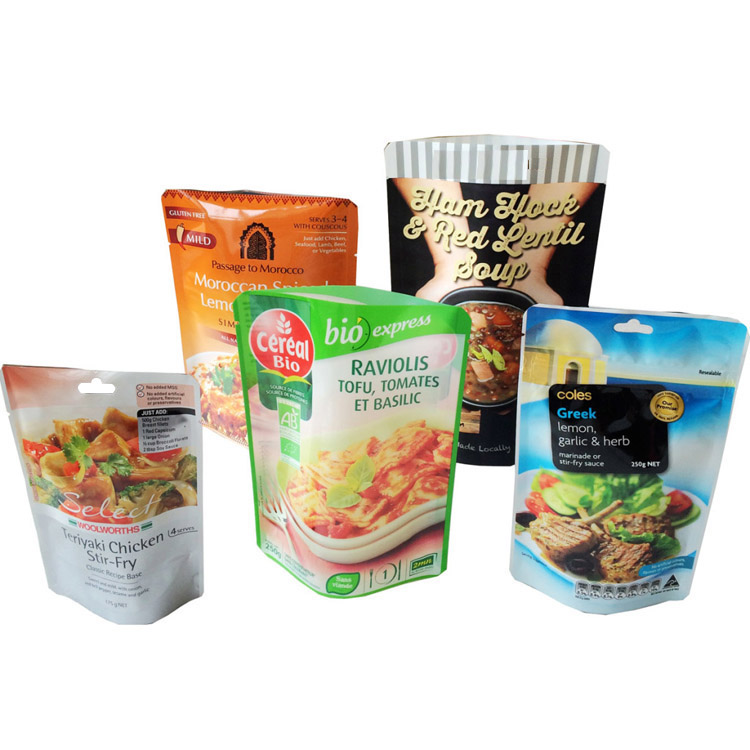
For pre-prepared meal products containing broth, sauces, or seasoning bases, packaging often goes beyond simply "holding liquids." It must also consider sealing strength, pressure resistance, heat resistance, and ease of use after use. For soup packets, seasonings, and sauces, retort pouches are usually preferred due to their superior temperature resistance, sealing, and transport compatibility.
The logic for packaging pre-prepared meals is different again for granular, block, powder, or combination pre-prepared meals. Whether the contents have sharp edges, are prone to oil seepage, are susceptible to moisture, require a tear-off experience, or need to be displayed standing up—all these factors directly influence material selection and bag type.
3. How to Choose Material Structure? The core principle isn't "the thicker the better," but rather "structural matching."
Many buyers initially focus on thickness, but what truly affects packaging performance is often not a single thickness, but the overall composite structure. The outer layer primarily handles printability, stiffness, and abrasion resistance; the middle layer typically provides barrier properties; and the inner layer is more related to heat-sealing performance, food contact safety, and actual filling compatibility.
For example, if the product requires stronger oxygen barrier, light protection, and aroma retention, a higher barrier structure should be considered; if the product requires high-temperature cooking or more complex logistics environments, temperature resistance and interlayer stability must be balanced; if the product emphasizes flexibility and drop resistance, sufficient safety redundancy must be included in the structure. A truly mature packaging solution doesn't just look at one indicator, but considers the contents, manufacturing process, transportation, and end-user experience together.
For ready-to-eat meal brands, another easily overlooked point in material selection is that different product stages may require different solutions. The same configuration may not be used for sampling, small-batch trial sales, and mass production. Early stages prioritize verification speed and demonstration effects, while later stages require balancing cost, efficiency, and stable delivery.
4. Bagged or Roll Film? It depends on the filling method and production line rhythm
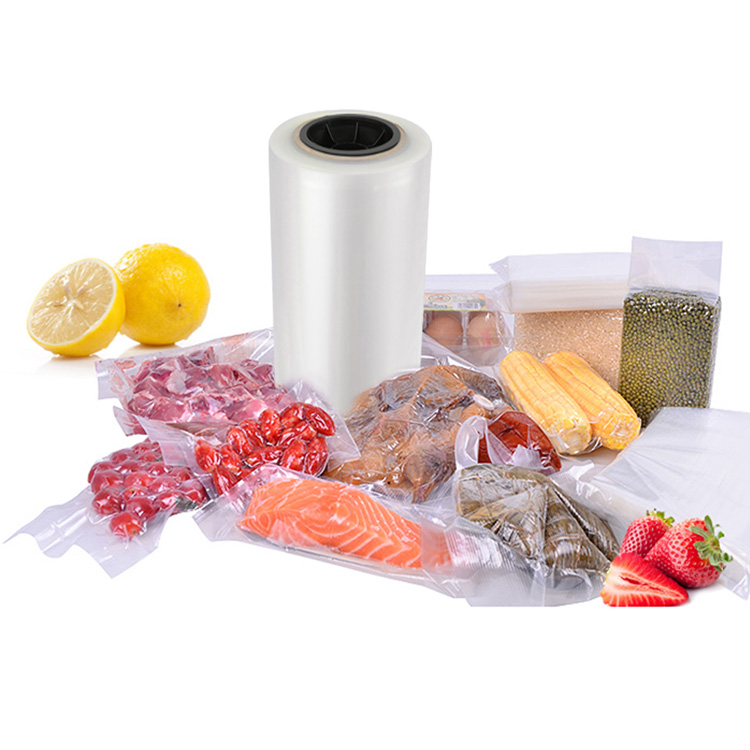
Many companies hesitate between "finished bags" and "roll film" when packaging ready-to-eat meals. There's no absolute better option; it depends on your filling method, daily output, equipment configuration, and subsequent supply chain rhythm. Finished bags are more suitable for products with multiple specifications, small batches, and frequent changeovers, and also facilitate more diverse bag types and end-user displays. Roll film is more suitable for highly automated, continuous filling scenarios, and usually has advantages in overall efficiency and unit packaging cost.
For projects involving high-speed automated filling, continuous sealing, and pursuing higher production line efficiency, roll film solutions are worth exploring. For high-volume products, standardized products, or production lines with mature equipment, the roll film route is usually easier to achieve in terms of efficiency. Of course, the choice between roll film and packaging also depends on the characteristics of the contents. For example, high-viscosity sauces, soup bases with particles, and pre-cooked dishes with high oil content require more precise matching of equipment and materials during the forming, metering, heat sealing, and trimming stages. If these details are not considered clearly in the early stages, problems such as unstable sealing, contaminated sealing edges, and uneven cuts can easily occur on the production line later.
5. More Than Just Size to Confirm Before Prototyping
Many packaging projects get stuck in the later stages, not because they can't be done, but because the initial data is incomplete. Truly efficient prototyping usually requires clearly stating key parameters in one go, including product form, single-pack capacity, whether sterilization is required, filling temperature, storage and transportation environment, expected shelf life, target bag type, whether an easy-tear opening is needed, whether a zipper is needed, whether a window is needed, and whether it will be used on an automated production line.
In addition to this basic information, brands should also consider the packaging's usage scenario in advance. Will consumers refrigerate it at home or heat it up before eating? Is the packaging geared towards retail shelf display or e-commerce shipping? Is the focus on the overall appeal of the gift box set, or on the efficiency of individual bags? These questions may seem market-driven, but they ultimately reflect on the packaging structure and manufacturing process.
For repurchase-oriented products like ready-to-eat meals, the packaging experience also influences user perception. Ease of opening, convenience of pouring, neat sealing, clean printing, and a premium feel in hand—these details, accumulated over time, are what truly enhance a brand's image through packaging.
6. In ready-to-eat meal packaging, consistent delivery is more important than "paper specifications."
In actual projects, many clients initially focus on a single parameter, such as thickness, unit price, or the name of a particular material. However, what truly determines delivery quality is often the stability of the entire solution. This includes consistent printing quality, strong lamination, sufficient heat-sealing windows, controllable batch-to-batch deviations, and the likelihood of bulging or leaks after transportation. These are the most practical issues during mass production.
Therefore, the core idea behind pre-prepared food packaging is not to blindly pursue the "most expensive structure" or the "most complex bag type," but rather to find a more suitable, reliable, and sustainable solution based on product characteristics, processing methods, and sales channels. The clearer the selection logic, the smoother the subsequent prototyping, mass production, and new product launches will be.
For companies working on projects involving pre-prepared meals, sauces, soup bases, and ready-to-eat foods, streamlining the packaging logic from the outset is often more cost-effective than repeated rework later. Packaging is not an auxiliary element, but rather part of the complete product experience.
相关新闻