2026 Flexible Packaging Industry News: Single Material, Short-Run Quick-Response, and Recyclable Designs are Rewriting Order-Taking Logic
In 2026, the flexible packaging industry is shifting from "material competition" to "system competition."
Entering 2026, the most significant change in the flexible packaging market is no longer simply the popularity of a particular material or bag type, but rather a comprehensive upgrade in customer requirements for packaging. In the past, many projects focused on "whether it can be made," but now more and more customers are concerned with: ease of recycling, suitability for short-run quick-response, stable machine operation, and a good balance between cost and performance.
Especially in sectors such as food, pet food, daily chemicals, health products, coffee, tea, and cross-border e-commerce, packaging projects are increasingly integrated into the product development process earlier. Brands no longer wait until the design is finalized before contacting packaging manufacturers; instead, they make judgments in advance regarding structure, materials, printing methods, and delivery schedules. This means that future flexible packaging orders will compete not only on production capacity but also on the ability to integrate solutions.
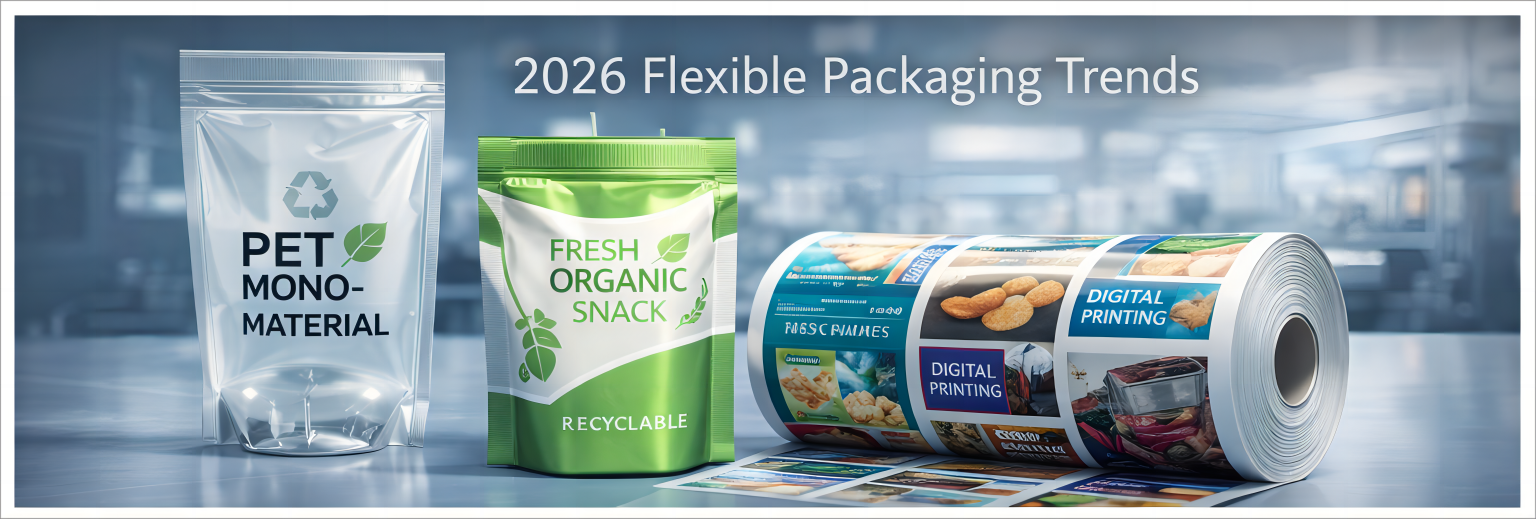
I. Single Material: No Longer Just a Concept, but a Prerequisite for More and More Projects
In the past, when discussing upgrades to flexible packaging, the first things that came to mind were high barrier properties, print quality, and shelf performance. Now, more and more projects are asking: Are there structural solutions that are more conducive to recycling? This is why "single material" continues to gain momentum in 2026.
However, single material does not mean simplicity. Many clients, when first encountering these solutions, mistakenly believe that simply replacing multi-layer composites with all-PE or all-PP will suffice. But in practice, issues such as stiffness, printability, heat-sealing windows, barrier requirements, bag shape presentation, and filling efficiency still need to be addressed. In other words, single material is more like a balancing act, rather than a material slogan.
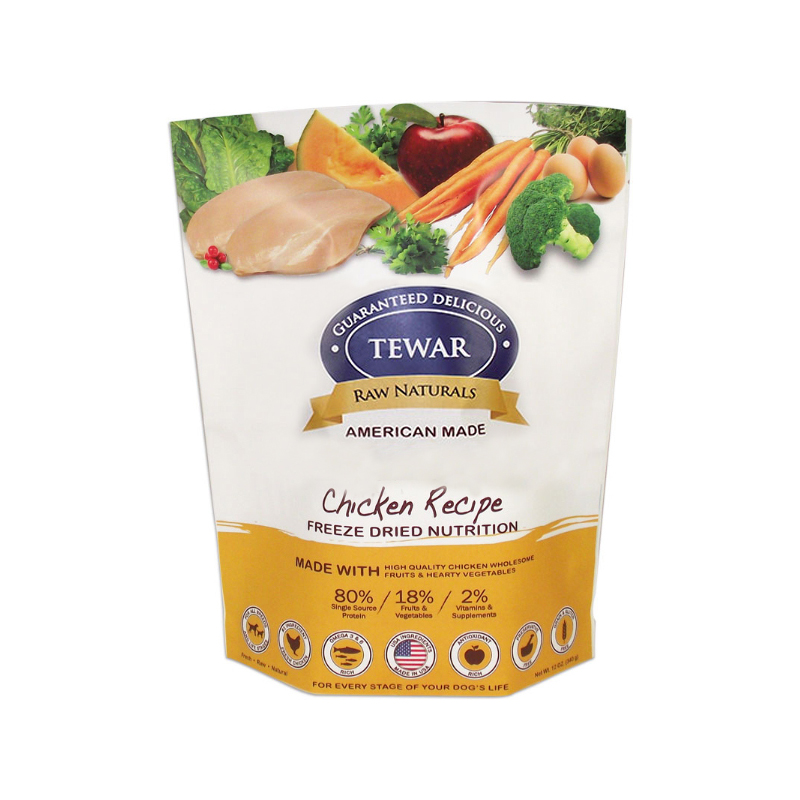
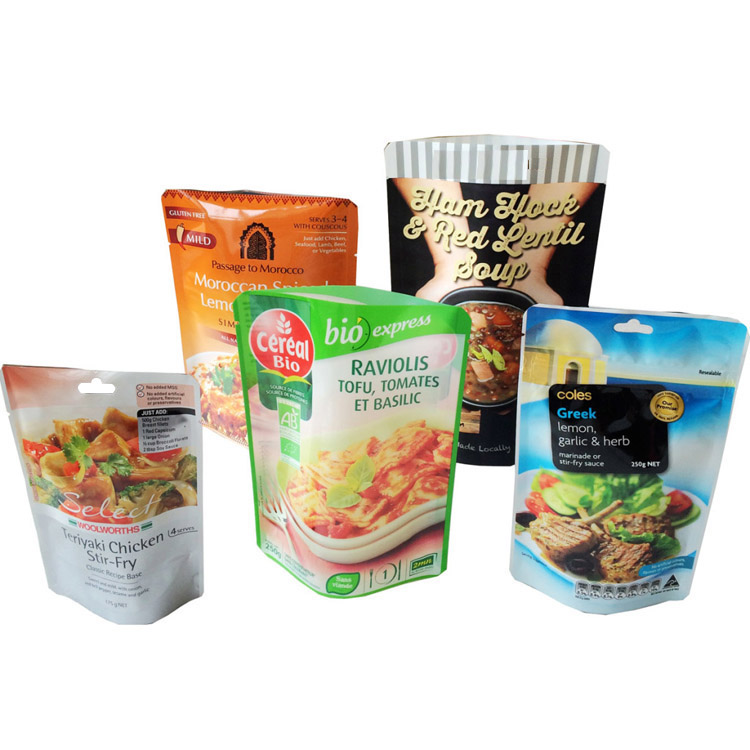
For projects requiring 3D displays, the bag structure should be considered in conjunction with the design. For example, for stand-up pouch projects, in addition to considering "recyclability," bottom support, edge sealing stability, post-filling display effect, and transport resistance should also be assessed.
II. Short-Run, Faster Delivery is Changing Order Timing, Re-Amplifying the Value of Digital Printing
Another trend significantly altering the industry is the rise of short-run, multi-version, and fast delivery. Increasingly granular SKUs, numerous channels, and faster promotional pace mean brands' packaging needs are no longer always "large-volume, single-version." Many projects prepare multiple visuals, different specifications, and even content for different channels during the trial sales phase.
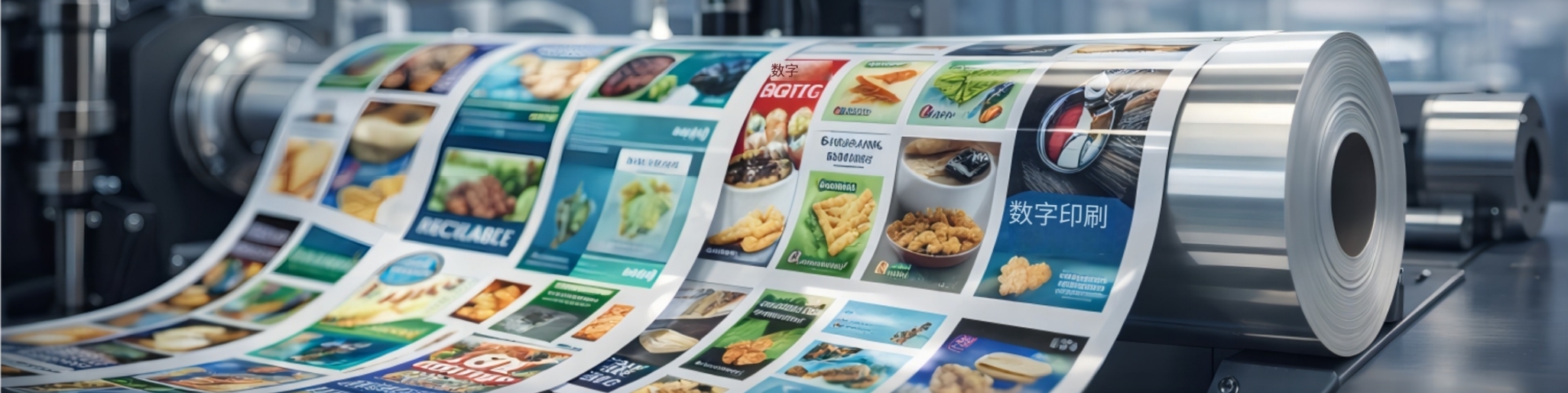
In this context, the advantages of digital printing are amplified again. While it may not replace all traditional printing methods, it is becoming increasingly relevant in scenarios such as new product trials, small-batch launches, multi-version testing, holiday marketing, and cross-border multilingual packaging. For brands, the core of digital printing is not just "small-batch production," but also its ability to make packaging decisions more flexible, reduce trial-and-error costs, and accelerate the process from sample to mass production verification.
Looking at order logic in 2026, suppliers who can simultaneously provide material suggestions, printing method matching, version switching management, and delivery schedule coordination will have a greater advantage than those simply competing on price.
III. The evaluation criteria for roll film projects are upgrading from "can it be installed on the machine" to "more stable installation."
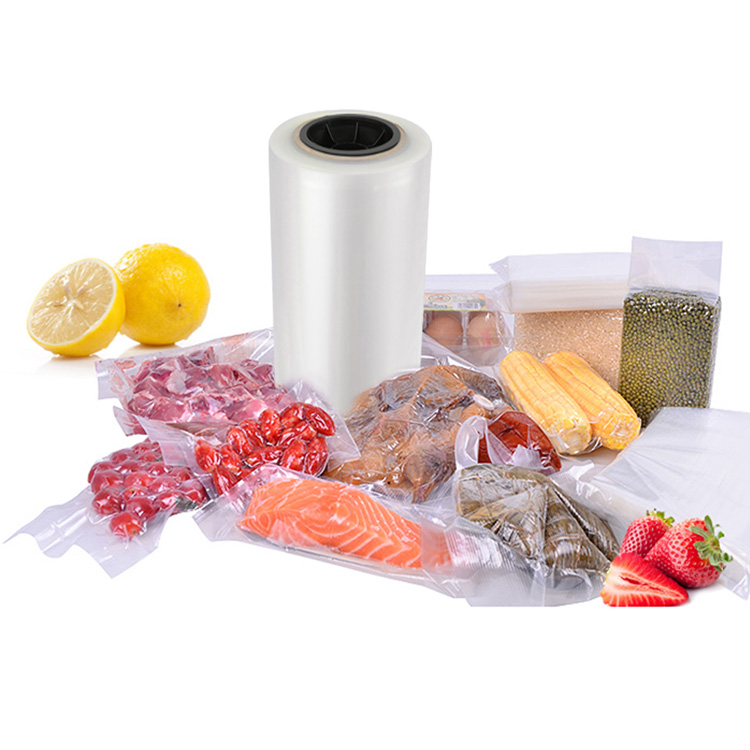
For automated packaging customers, roll film remains a very important delivery method. However, after 2026, the most common questions regarding roll film projects will no longer be just "have they done this before?", but rather, customers will be more concerned about: whether the machine runs smoothly, whether the sealing window is wide, whether batches are stable, and whether problems are likely to occur after printing and slitting.
This means that roll film customization can no longer simply provide an approximate thickness and material structure, but must consider the equipment type, film path, sealing method, speed range, contents characteristics, and end-user scenario to develop a solution. For food, powder, granules, liquids, or aroma-sensitive products, the balance between barrier properties and sealing stability must also be considered simultaneously.
IV. In 2026, customers are no longer most concerned about single-point performance, but rather the overall delivery result.
Many customers no longer simply ask "What material is it?", but will ask more comprehensive questions:
Can this structure balance barrier properties and cost?
Does it support small-batch trial production and subsequent mass production?
Will the color and bag shape remain stable after the pattern redesign?
Will it be easier to meet the recyclability requirements?
Will issues such as sealing problems, edge curling, slippage, and curling occur during mass production of roll film or finished bags?
This indicates that the flexible packaging industry has entered a new stage of competition: customers no longer need a single selling point, but a complete and implementable solution. Whoever can seamlessly integrate material structure, bag design, printing methods, sampling schedule, mass production control, and delivery coordination will be more likely to secure high-quality orders.
V. For brands, earlier engineering assessment is needed for packaging projects in 2026.
If you are a brand owner, purchasing manager, or product manager, when undertaking flexible packaging projects in 2026, it is recommended not to wait until the design is fully finalized before working backward to determine materials and processes. Instead, try to confirm these issues in advance:
Is the product sensitive to oxygen, moisture, light, or more importantly, aroma loss?
Is shelf display necessary, or is transportation efficiency and cost more important?
Is the order a large-volume, long-term project, or a small-batch project requiring frequent redesigns?
Is it better suited for pre-made bags or roll film?
Does the client have specific requirements regarding recyclability, waste reduction, or environmental friendliness?
If these questions are clarified upfront, significant rework costs will be saved during prototyping, trial production, and mass production. Especially at an industry juncture like 2026, packaging decisions are no longer just procurement actions but part of product strategy.
Conclusion: In the flexible packaging industry of 2026, success will not be defined by a single material or process. What truly determines project success is a more balanced solution, more stable delivery, more flexible delivery schedule, and a direction that aligns with recyclability and market trends.
For packaging manufacturers, the future competition will not be about "I can do it too," but "Can I help clients succeed more reliably?" For brands, the earlier they integrate packaging into their product competitiveness, the easier it will be to gain an advantage in new product launches, channel expansion, and cost control.