About Us
What details should you confirm before customizing food packaging bags? Material, bag type, printing, and quantity all need to be carefully considered.
Views : 314
Update time : 2026-06-01 16:35:14
What details should you confirm before customizing food packaging bags? Material, bag type, printing, and quantity all need to be carefully considered.
Customizing food packaging bags may seem like simply choosing a bag, but it involves many details. Material, bag type, thickness, size, printing method, sealing method, and minimum order quantity all affect the finished product's usability. If these details aren't confirmed beforehand, problems may arise later, such as insufficient space, poor sealing, unsatisfactory printing quality, or exceeding the budget.
For food factories, snack brands, agricultural product merchants, and e-commerce clients, packaging bags are not only containers for products but also part of product display and brand identification. A suitable food packaging bag must meet basic protection needs while also providing consumers with a clear, reassuring, and desirable product.
First, determine which type of packaging bag is suitable for your product.
Different foods have different requirements for packaging bags. Dried fruits, nuts, tea, coffee, candy, and biscuits typically prioritize moisture protection, oxidation prevention, and display quality; frozen foods, seasonings, sauces, and cooked foods require consideration of low-temperature resistance, oil resistance, puncture resistance, and sealing strength.
If the product itself is relatively lightweight, a standard thickness composite bag can be chosen; if the product has sharp corners, hard particles, or involves long transportation distances, the material strength should be appropriately increased. Thicker packaging bags are not necessarily better; the choice should be based on the product's weight, storage method, and distribution environment.
II. Food Packaging Bag Material Selection Based on Contents
Common materials for food packaging bags include PE, PET, PA, CPP, aluminum foil, metallized film, and multi-layer composite film. Different materials have varying transparency, toughness, barrier properties, and heat-sealing performance. Therefore, before customizing, it's essential to confirm whether the product is susceptible to moisture, light, or oxidation, and whether refrigeration, freezing, or vacuum sealing is required.
If you are unsure about the differences between materials, you can first refer to basic information such as "What are the Types of Food Packaging Bag Materials?" and then choose the appropriate structure based on your product. For example, transparent composite bags are suitable for general dry goods, while composite materials with better barrier properties are more suitable for products such as nuts, tea, and coffee.
III. Bag Type Affects Display and User Experience
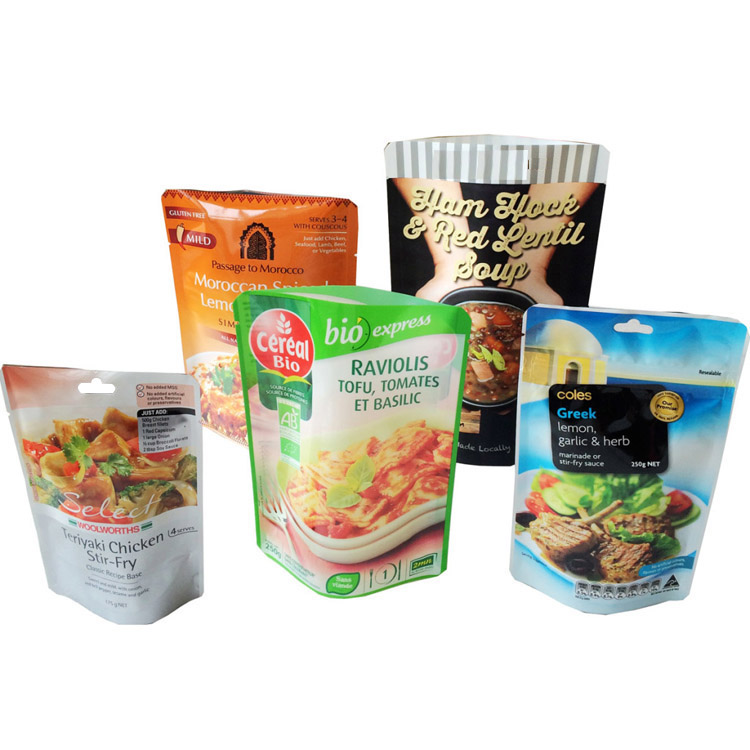
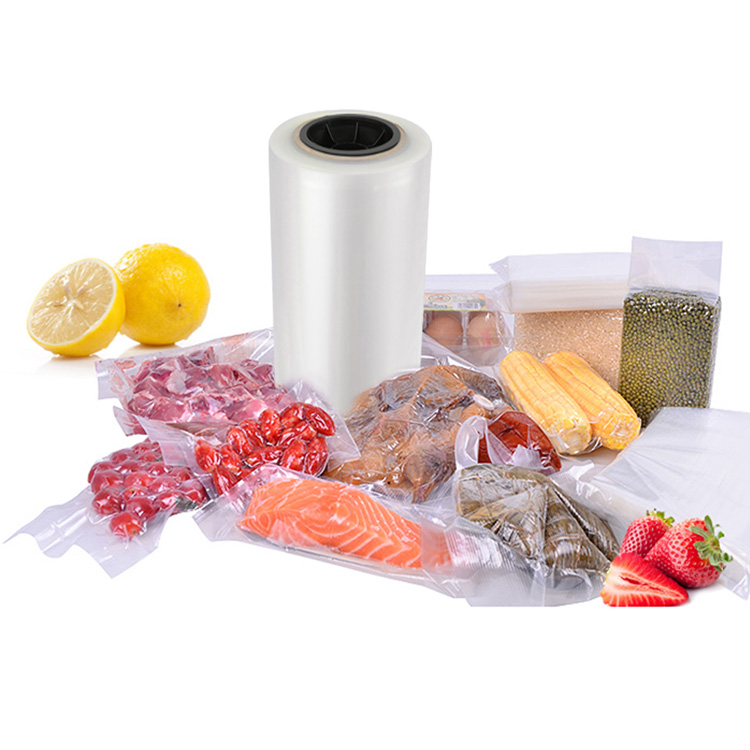
Common food packaging bag types include three-side seal bags, stand-up pouches, eight-side seal bags, zipper bags, back-seal bags, vacuum bags, and packaging roll film. Different bag types are suitable for different usage scenarios; appearance alone is not enough.
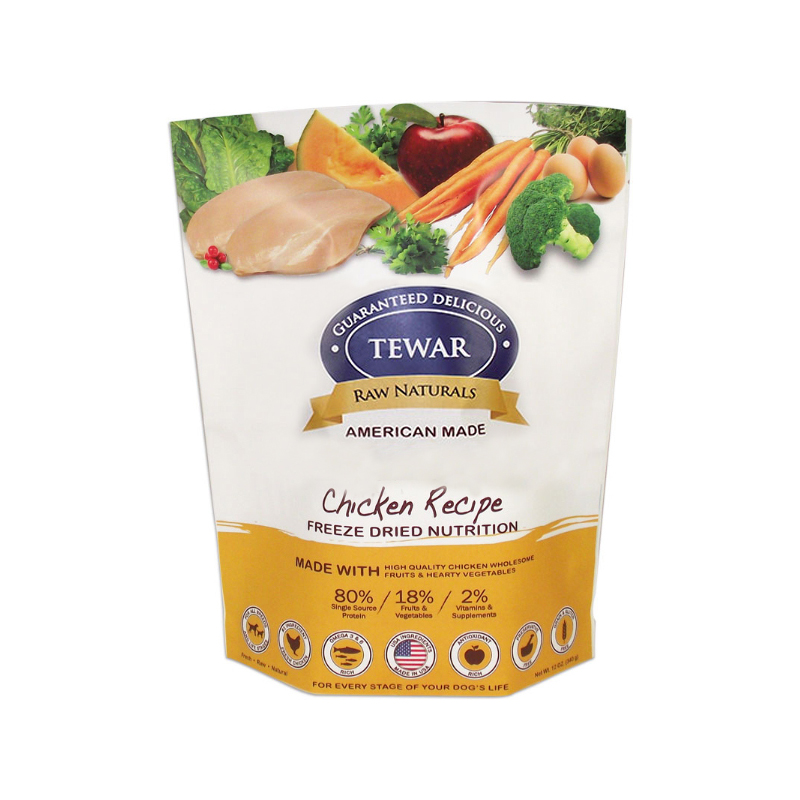
Stand-up pouches are suitable for shelf display, offering good upright posture; zipper bags are suitable for foods that require multiple openings; three-side seal bags have a simple structure and are suitable for small-sized products; eight-side seal bags offer a more three-dimensional look and are suitable for mid-to-high-end snacks, pet food, coffee beans, etc.; packaging roll film is more suitable for mass production by automatic packaging machines.
IV. Size and Thickness Should Not Be Estimated Based on Experience
Many customers, when customizing packaging bags, tend to simply say "about the right size." However, in actual production, the size of the packaging bag affects filling efficiency, sealing effect, and overall proportions. If the size is too small, the product won't fit or sealing will be difficult; if the size is too large, the product will look empty, and material will be wasted.
A more prudent approach is to first confirm the product's net content, individual product volume, whether inflation is required, whether desiccant is needed, and whether it will be boxed after packaging. If a physical sample is available, a trial pack can be made before determining the final size and thickness.
V. Printing Design Should Balance Aesthetics and Production Feasibility
Food packaging bag printing involves more than just creating beautiful images; it also requires consideration of color reproduction, text clarity, barcode recognition, QR code scanning, and production processes. The product name, net content, ingredient list, production information, and storage methods on the packaging must be clear and legible.
If the design draft contains many colors, complex gradients, or too small text, color distortion and unclear details may occur during actual printing. It is recommended to clearly present key information during the design stage and avoid cramming all content into one area.
VI. Confirm Quantity, Proofing, and Delivery Date Before Placing an Order
Custom food packaging bags typically involve plate making, printing, lamination, curing, slitting, and bag making. Different processes have different production cycles. For first-time custom orders, it's recommended to confirm the minimum order quantity, sampling method, whether custom printing is required, and whether you plan to repurchase regularly.
For clients unfamiliar with the customization process, it's advisable to first understand the process of custom packaging bags before preparing product information, size requirements, design files, and packaging intended use. The more complete the initial information, the higher the communication efficiency and the lower the probability of errors later.
In summary, custom food packaging bags shouldn't be judged solely on price; a comprehensive consideration of product type, material structure, bag shape, size, printing quality, and production quantity is also crucial. Suitable packaging bags can protect food and enhance the product's overall performance on shelves, online, and during shipping.
If this is your first time customizing food packaging bags, it's recommended to start with the product's preservation needs, then determine the material and bag shape, and finally choose printing and surface finishes based on your budget. This approach results in more stable packaging bags, better suited for long-term use and mass production.
Related News